Category Archives: General Advice

Labour Pains

Bad news for worries – qa study from Norway has found that labour takes an average 47 minutes longer for women who fear giving birth.

The research which involved more than 2,000 women suggests that anxiety increases the hormons that weaken the ability of the uterus to contract.

Researchers advise talking through any worries with your doctor and midwife, both to tell fears and to improve communication – since women who don’t express their needs clearly also seem to have long labours.

Breastfeed your baby to stay slim

Breastfeeding has long been believed to help mothers get their figure back after giving birth. A new study claims it could also help them stay slim for decades.

Researchers at the Oxford University found that women who breastfed their babies even for a few months after the birth were less likely to be obese 30 years later. They researchers claimed worked out that for every six months a woman gives her baby breast milk, she loses around two pounds, depending on her initial weight and height.

Although this may not sound much, the researchers claimed it could help prevent thousands of deaths from cancer, heart problems and other illnesses related to obesity., the Daily Mail reported. The study, published in the International Journal of Obesity, surveyed 740,600 women whose average age was 57. They had all answered questions about how many children they had and the total number of months they had spent breastfeeding.

Experts have already established that breastfeeding uses up large amounts of energy which is equivalent to burning 500 calories a day — the same as a typical gym session.

Now, the researchers worked out that for every six months a woman breastfeeds her baby, her body mass index (BMI) — the measurement of obesity — falls by 1 per cent.

An average woman who is 5ft 6ins tall and weighs 11st 1lb (70.30kg) would have a BMI measurement of 25, classified as overweight. But if her BMI was to fall by 1 per cent it would be about 24.75, which is deemed “healthy”, and she would weigh 10st 13lb (69.39kg).

Dr Kirsty Bobrow, who led the study, said: “We already know breastfeeding is best for babies, and this study adds to a growing body of evidence that the benefits extend to the mother as well — even 30 years after she’s given birth.

“Pregnant women should be made aware of these benefits to help them make an informed choice about infant feeding.”

The researchers also pointed out that breastfeeding may help prevent thousands of deaths related to obesity from cancer, heart disease and diabetes.

Prof Dame Valerie Beral, Director of Cancer Epidemiology Unit at Oxford University, who was also involved in the study, said: “Our research suggests that just six months of breastfeeding by UK women could reduce their risk of obesity in later life.

“A one per cent reduction in BMI may seem small, but spread across the population of the UK that could mean about 10,000 fewer premature deaths per decade from obesity-related conditions, such as diabetes, heart disease and some cancers.”

The research also found that women were more likely to be obese if they had several children.

This backs up the concerns of health professionals that many gain weight during pregnancy which they don’t lose after the birth of their babies.

Why a dog is a child’s best friend

They have long been thought of as man’s best friend. But it seems dogs could also have benefits for babies.

Having a pet dog helps keep under-ones free from breathing problems and infections, studies suggest.

Researchers found babies who lived with a dog spent fewer weeks with ear infections, coughs or running noses. They were also less likely to need antibiotics.

Living with cats could also be good for babies’ health, but to a lesser extent.

The finding knits with the hygiene hypothesis – that a certain amount of exposure to dirt and grime helps the immune system mature. Previous research has credited having a pet as a youngster with a lower risk of allergies.

In the latest study, published in the journal Pediatrics, researchers from Kuopio University Hospital in Finland tracked the health of 397 infants during their first year.

Parents filled out weekly diaries starting when their child was nine weeks old, recording information on the baby’s health, and contact with cats and dogs.

Based on those diaries and a year-end questionnaire, researchers determined that 35 per cent of the children spent the majority of their first year with a pet dog and 24 per cent in a home with a cat.

The majority of babies had at least some contact with a dog at their house during the study period and more than one third were exposed to a cat. Infants with no dog contact at home were healthy for 65 per cent of their parents’ weekly diary reports. That compared with between 72 and 76 per cent for those who had a dog at home.

Babies in dog-owning families were also 44 per cent less likely to get inner ear infections and 29 per cent less likely to need antibiotics.

Healthiest of all were those with a pet dog that spent no more than six hours inside the house. This, say the researchers, could be because these animals are spending more time outside and so bringing home more grime and bugs.

They added, though, that they could not rule out other explanations for the link, including differences between pet owners and those without animals at home.

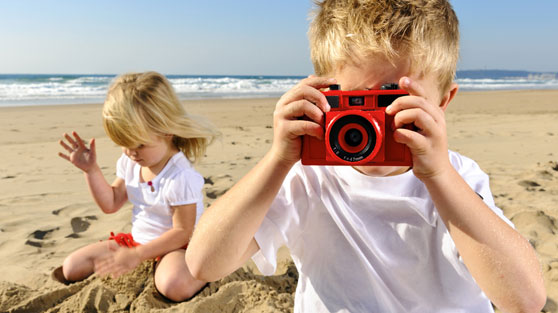
Holiday Activities – Fun by the sea

Desert Island

Pretend you are shipwrecked on an island. Now use your imagination:
• What foods would you wish for?
• What animals would you pretend were nearby?
• What do the fish in the water look like?
• What flowers can you see?

Sea Jewels

• When you go to the beach try and collect shells, feathers, small smooth pieces of glass, dried starfish, small pebbles
• Identify each if you can, and then display them in a wide necked jar or small bowl filled with water to keep them shiny

Fun for Summer with the Kids!

Tents can be put up almost anywhere. If you can, camp outdoors with your child in a real tent.

You can also camp indoors by using your imagination – a small table can be set up wherever the tent is to be built, and just put an old sheet over the table.

Be sure to stock the tent with an emergency supply box:
• A torch
• Some games or toys
• A couple of pillows
• Snacks
• And anything else you might need

Monster time!

For extra fun pretend there is a monster outside. Your child can take turns with you pretending to be the monster. Peek out when you think the monster has gone away. Make friends with the monster and offer the monster a snack.