Category Archives: General Advice

10 early signs of pregnancy!

Could you be pregnant? Some symptoms may show up about the time you’ve missed a period – or a week or two later. In fact, 7 out of 10 women have symptoms by the time they’re six weeks pregnant.

If you’re not keeping track of your menstrual cycle or if it varies widely from one month to the next, you may not be sure when to expect your period. But if you start to experience some of the symptoms below – not all women get them all – and you’re wondering why you haven’t gotten your period, you may very well be pregnant. Take a home pregnancy test to find out for sure!

10. Food aversions

If you’re newly pregnant, it’s not uncommon to feel repelled by the smell of a bologna sandwich or a cup of coffee, and for certain aromas to trigger your gag reflex. Though no one knows for sure, this may be a side effect of rapidly increasing amounts of estrogen in your system. You may also find that certain foods you used to enjoy are suddenly completely repulsive to you.

9. Mood swings

It’s common to have mood swings during pregnancy, partly because of hormonal changes that affect your levels of neurotransmitters (chemical messengers in the brain). Everyone responds differently to these changes. Some moms-to-be experience heightened emotions, both good and bad; others feel more depressed or anxious.

8. Abdominal bloating

Hormonal changes in early pregnancy may leave you feeling bloated, similar to the feeling some women have just before their period. That’s why your clothes may feel more snug than usual at the waistline, even early on when your uterus is still quite small.

7. Frequent urination

Shortly after you become pregnant, hormonal changes prompt a chain of events that raise the rate of blood flow through your kidneys. This causes your bladder to fill more quickly, so you need to pee more often. This symptom may start as early as six weeks into your first trimester.

Frequent urination will continue – or intensify – as your pregnancy progresses. Your blood volume rises dramatically during pregnancy, which leads to extra fluid being processed and ending up in your bladder. The problem is compounded as your growing baby exerts more pressure on your bladder.

6. Fatigue

Feeling tired all of a sudden? (No, make exhausted. No one knows for sure what causes early pregnancy fatigue, but it’s possible that rapidly increasing levels of the hormone progesterone are contributing to your sleepiness. Of course, morning sickness and having to urinate frequently during the night can add to your sluggishness, too.

You should start to feel more energetic once you hit your second trimester, although fatigue usually returns late in pregnancy when you’re carrying around a lot more weight and some of the common discomforts of pregnancy make it more difficult to get a good night’s sleep.

5. Tender, swollen breasts

One of the early signs of pregnancy is sensitive, sore breasts caused by rising levels of hormones. The soreness and swelling may feel like an exaggerated version of how your breasts feel before your period. Your discomfort should diminish significantly after the first trimester, as your body adjusts to the hormonal changes.

4. Nausea

For some women, morning sickness doesn’t hit until about a month after conception, though for others it may start a week or two earlier. And not just in the morning, either: Pregnancy-related nausea (with or without vomiting) can be a problem morning, noon, or night.

About half of pregnant women with nausea feel complete relief by the beginning of the second trimester. For most others it takes another month or so for the queasiness to ease up. A lucky few escape it altogether.

3. A missed period

If you’re usually pretty regular and your period doesn’t arrive on time, you may decide to do a pregnancy test before you notice any of the above symptoms. But if you’re not regular or you’re not keeping track of your cycle, nausea and breast tenderness and extra trips to the bathroom may signal pregnancy before you realize you didn’t get your period.

2. Your basal body temperature stays high

If you’ve been charting your basal body temperature and you see that your temperature has stayed elevated for 18 days in a row, you’re probably pregnant.

And finally …

1. The proof: A positive home pregnancy test

In spite of what you might read on the box, many home pregnancy tests are not sensitive enough to reliably detect pregnancy until about a week after a missed period. So if you decide to take a test earlier than that and get a negative result, try again in a few days. Remember that a baby starts to develop before you can tell you’re pregnant, so take care of your health while you’re waiting to find out.
Baby Signing (The Fun of Teaching Your Baby to Sign)

What is baby signing?

Baby signing is using gestures or signs to communicate with your baby. Many mums use American or British Sign Language when teaching their babies to sign but it is perfectly okay to create your own signs. The purpose of baby signing is to communicate with your baby. Babies are able to use hand gestures much earlier than they can communicate with words. Not being able to communicate can be frustrating for baby and mum. Teaching your baby signs gives her the opportunity to communicate with you possibly months before she can actually talk.

Why sign with your baby?

Communicate with baby earlier: Babies who sign can communicate their needs sooner because they can communicate before they are capable of talking. This is particularly helpful for children who have speech and language delays. Some kids do not begin talking till they are two years old or older; therefore, baby signing gives them a way to communicate their needs.

Decreases baby’s frustration and mum’s: Some researchers believe that babies may cry, have tantrums or bite because they are frustrated and cannot communicate their needs. Have you ever been around a crying baby and just wanted to say “what do you want!” because you can’t figure out what the problem is? Teaching your baby to communicate with signs or gestures will help her express her needs and hopefully lead to less frustration for mum and baby.

Helps your baby learn to talk: Many parents and skeptics are concerned that baby signing will delay talking or discourage a baby from using words to communicate. According to a long-term study conducted at the University of California and funded by the National Institute of Health, babies who use signing have an easier time learning to talk.

May help your child to communicate with the deaf community: If you choose to use American or British sign language, baby signing is a good introductory course for learning traditional sign language. Of course, baby signing is rudimentary and does not teach the sentence structure for American or British sign language but if you would like to pursue further studies in sign language this will certainly help.

Helps baby to communicate with siblings: Teaching your entire family to use baby signs will help siblings to bond and get along better. Big brothers or sisters usually like being involved with teaching their younger sibling to sign. It helps them feel connected and to communicate with each other.

Improves bond between mum and baby: Seeing your baby sign her first word is so exciting. Baby signing gives mum and baby a special way to talk to each other.

Its fun: Why not teach your baby to sign? Its fun!

Is it right to have child free zones on airplanes?

AirAsia are offering baby-free zones on their flights which sparks the debate, should all flights offer this facility?
The flights will not cost passengers any more than standard seats and due to the barrier created by toilets and bulkheads, AirAsia claim that they will not hear the sound of tantrums or babies crying.

Earlier this year, a survey concluded that the majority of British travellers were in favour of child-free flights. Malaysia Airlines already limit the seats available to families with children and a poll by TripAdvisor suggests that over a third of British travellers would be willing to pay extra to fly without children on board.

One argument against the flights, other than the inconvenience it could cause parents, is where to draw the line for baby-free zones. Could train companies stop babies from being allowed in the quiet zones? What about eating out? Pubs are much more children-friendly now than perhaps 20 years ago. Would this change?

Pregnant women to be given whooping cough vaccine to protect unborn child

The Department of Health announced a new £10m vaccination programme for 650,000 pregnant women to protect their infants once they are born, while they are too young to be immunised themselves.

There have been nine deaths in England of babies under the age of ten weeks and one in Northern Ireland, the highest number of deaths for a decade. None had been vaccinated before they fell ill.

Newborn babies cannot mount an immune response to vaccines so experts said the best way to protect them is to give their mothers a booster late in pregnancy so that her antibodies against the disease are passed to the unborn child.

It is only the second time pregnant women will be routinely offered a vaccine while pregnant, after the pandemic flu vaccine and then the seasonal flu jab following the H1N1 swine flu outbreak.

Women are generally advised not to take any medication that is not absolutely necessary while pregnant but experts said the seriousness of the outbreak and the safety of the vaccine made this the most effective option.

Halloween Tip #6..

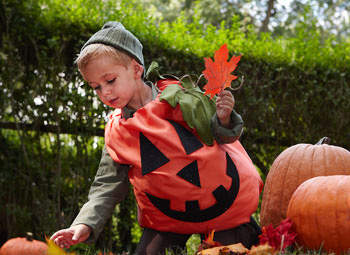
Here’s a fun and easy way to make a traditional Halloween costume.  Everybody recognizes the pumpkin as a part of autumn fun.  Using a hoodie and some fabric, you can make this costume and have a great time of trick-or-treating!


What you’ll need:

Orange fabric (1 yd x 54″w remnant)
1 heavy duty paper plate
Black felt
Hot glue gun, white glue
1/4 yard green fabric (we used linen)
Wired raffia
4-6 plastic grocery bags
Re-sealable plastic storage baggies & a straw or other light-weight filler
Needle and thread
1 yard yarn, ribbon, or other cord
Green knit cap
Pattern

How to make it:

To make the pumpkin body:

Cut a hole in the paper plate large enough for your child’s head to fit through.  Test to be sure it fits.
Take the orange fabric and make darts by hot gluing folds along the long edge of the fabric until you have gathered the fabric enough to fit around the head hole in the paper plate.
Hot glue the gathered fabric onto the plate; leave a little extra fabric to wrap down through the hole and glue to the other side of the plate so the edge won’t scratch your child’s neck.
Close up the back of the costume by hot gluing a seam down the back.
Have your child try on the costume so you can mark where the arm holes should be.  Cut the arm holes and hot glue the fabric to the inside of the costume to keep the opening neat.
Fold under the bottom edge of the fabric and stitch it in place, creating a 1″ hem pocket.  Leave a gap at the beginning and end of your stitch line.  Ease cord, ribbon or yarn through the pocket of the hem.  Once the costume is on your child, pull the ends of the cord to gather the fabric and tie it in a double bow knot.  Excess cord can be tucked up into the inside of the gathered edge.
Cut eyes and mouth from black felt.  Have your child put the costume on, so you can position the eyes and mouth before affixing them.

To make the leaf:

Fold the green fabric in half.  Lay the leaf pattern on the bias (at an angle across the grain) of the fabric.  Pin the pattern in place and cut around it.  Cut out four leaf patterns from the fabric.
Lay wired raffia out along pattern to approximate the lengths required for the leaf veins. Twist them together to keep them in place and set aside.
Apply white glue to one piece of fabric leaf and spread it evenly, covering the fabric completely.  Lay the wired raffia on the glued fabric and cover with the second pattern piece.  Press the fabric firmly around the raffia.  Flip the leaf over and press from the other side.
When glue has dried completely, trim fabric edges if necessary and bend raffia to give leaf shape.  Twist one end of a second piece of raffia tightly around the first.   Wrap the loose end around a pill bottle or other round object to create a faux vine.
Repeat steps 2-4 for the second leaf.
Attach leaves to top of the costume with hot glue, positioning them near the neckline.

To fill in the pumpkin:

Fill grocery bags evenly with inflated re-sealable baggies or other filler. Measure the length of your child’s torso (the distance from their shoulder to their crotch.)  Hot glue the handles of the grocery bags to the paper plate on the inside of the costume so they hang no lower than your child’s torso measurement.

Tips:

Dress your child in a green shirt and brown pants  to wear under the costume.
Add a cozy green knit cap to top off the costume and keep your little one warm.