Category Archives: First Birthday

first birthday

Ideas for Summer!

Go strawberry picking with your kid and continue the fun at home. This recipe is so easy your kids can probably make them for you. You’ll feel great about letting your kids snack on these frozen treats and they’ll love the taste.

Ingredients

1 pint (1 pound) strawberries
1/2 cup orange juice concentrate
1/2 cup sugar
1/2 cup plain yogurt

Cooking Instructions

In a blender combine strawberries, concentrate and sugar; puree to combine.
Divide among nine 3-ounce plastic cups. Place a stick in the center of each cup; place in freezer. After 4-6 hours adjust stick to make sure it is upright in the center of the pop.
To remove the popsicle, run hot water over the cup; twist gently to remove.

Substitution(s)

Frozen strawberries may be substituted for fresh.

Popsicle molds can be used instead of plastic cups and wooden sticks. Yield will be different.

Mixture may be strained to get a smooth pop without seeds. Just pour mixture through sieve before dividing among the cups. Yield may be slightly less.
Tips & Tricks

To remove pops, run hot water over the outside of the plastic cup for a moment or two.

To secure stick in upright center position, wrap 4 rubber bands around the cup on each side of the stick.
Preparation Time:

5 minutes

Ready In:

5 minutes plus 8+ hours freezing time

Servings:

10 (3-ounce) popsicles

How kids can help

Depending on the age of the child, they can make these on their own.

Feeding Tips for your Toddler

You don’t have to introduce foods to your child in any particular order. If you want to give your baby a taste of tofu at age 6 months, go ahead, even though it’s not listed on our chart until age 8 months.

It was once considered important to wait until age 1 or even age 3 before introducing highly allergenic foods like eggs, fish, and peanuts. While experts now believe that postponing these foods doesn’t prevent food allergies, many pediatricians still recommend delaying or waiting to introduce them – especially for children with eczema or with a family history of allergies. However you choose to introduce new foods, discuss your decision with your child’s doctor first.
Age: Birth to 4 months

Feeding behavior

Rooting reflex helps your baby turn toward a nipple to find nourishment

What to feed

Breast milk or formula ONLY

How much per day

See How to Tell if Your Baby’s Getting Enough Breast Milk
See How to Tell How Much Formula Your Baby Needs

Feeding tip

Your baby’s digestive tract is still developing, so solid food is off-limits for now.

Age: 4 to 6 months

Signs of readiness for solid food

Your baby probably won’t do all these things – they’re just clues to watch for.

Can hold head up
Sits well in highchair
Makes chewing motions
Shows significant weight gain (birth weight has doubled)
Shows interest in food
Can close mouth around a spoon
Can move food from front to back of mouth
Can move tongue back and forth, but is losing tendency to push food out with tongue
Seems hungry after 8 to 10 feedings of breast milk or 40 oz. of formula in a day
Is teething

What to feed

Breast milk or formula, PLUS
Pureed food (like sweet potatoes, squash, apples, bananas, peaches, or pears) or semi-liquid iron-fortified cereal

How much per day

Begin with about 1 teaspoon pureed food or cereal. Mix cereal with 4 to 5 teaspoons breast milk or formula (it’ll be very runny).
Increase to 1 tablespoon of pureed food, or 1 tablespoon of cereal mixed with breast milk or formula, twice a day. If giving cereal, gradually thicken the consistency by using less liquid.

Feeding tips

If your baby won’t eat the cereal on the first try, offer it again in a few days.
Get more detailed tips on how to introduce solids.
Print our step-by-step guide to feeding your baby.

Age: 6 to 8 months

Signs of readiness for solid food

Same as 4 to 6 months

What to feed

Breast milk or formula, PLUS
Iron-fortified cereals (rice, barley, oats)
Pureed or strained fruits (banana, pears, applesauce, peaches)
Pureed or strained vegetables (avocado, well-cooked carrots, squash, and sweet potato)
Pureed meat (chicken, pork, beef)
Pureed tofu
Pureed legumes (black beans, chickpeas, edamame, fava beans, black-eyed peas, lentils, and kidney beans)

How much per day

3 to 9 tablespoons cereal, in 2 to 3 feedings
1 teaspoon fruit, gradually increased to 1/4 to 1/2 cup in 2 to 3 feedings
1 teaspoon vegetables, gradually increased to 1/4 to 1/2 cup in 2 to 3 feedings

Feeding tips

Introduce new foods one at a time, with at least three days in between to make sure your baby’s not allergic.
Get more detailed tips on how to introduce solids.

Age: 8 to 10 months

Signs of readiness for solid and finger foods

Same as 6 to 8 months, PLUS
Picks up objects with thumb and forefinger (pincer grasp)
Can transfer items from one hand to the other
Puts everything in his mouth
Moves jaw in a chewing motion

What to feed

Breast milk or formula, PLUS
Small amounts of soft pasteurized cheese, yogurt, cottage cheese (but no cows’ milk until age 1)
Iron-fortified cereals (rice, barley, wheat, oats, mixed cereals)
Mashed fruits and vegetables (bananas, peaches, pears, avocados, cooked carrots, squash, potatoes, sweet potatoes)
Finger foods (lightly toasted bagels, cut up; small pieces of ripe banana; well-cooked spiral pasta; teething crackers; low-sugar O-shaped cereal)
Small amounts of protein (egg, pureed meats, poultry, and boneless fish; tofu; well-cooked and mashed beans with soft skins like lentils, split peas, pintos, black beans)

How much per day

1/4 to 1/3 cup dairy (or 1/2 oz. cheese)
1/4 to 1/2 cup iron-fortified cereal
1/4 to 1/2 cup fruit
1/4 to 1/2 cup vegetables
1/8 to 1/4 cup protein foods

Feeding tip

Introduce new foods one at a time, with at least three days in between to make sure your baby’s not allergic.

Age: 10 to 12 months

Signs of readiness for additional solid food

Same as 8 to 10 months, PLUS
Swallows food more easily
Has more teeth
No longer pushes food out with tongue
Is trying to use a spoon

What to feed

Breast milk or formula PLUS
Soft pasteurized cheese, yogurt, cottage cheese (but no cows’ milk until age 1)
Iron-fortified cereals (rice, barley, wheat, oats, mixed cereals)
Fruit cut into cubes or strips, or mashed
Bite-size, soft-cooked vegetables (peas, carrots)
Combo foods (macaroni and cheese, casseroles)
Protein (egg; pureed or finely ground meats, poultry, and boneless fish; tofu; well-cooked and mashed beans)
Finger foods (lightly toasted bread or bagels, small pieces of ripe banana, spiral pasta, teething crackers, low-sugar O-shaped cereal)

How much per day

1/3 cup dairy (or 1/2 oz. cheese)
1/4 to 1/2 cup iron-fortified cereal
1/4 to 1/2 cup fruit
1/4 to 1/2 cup vegetables
1/8 to 1/4 cup combo foods
1/8 to 1/4 cup protein foods

Feeding tip

Introduce new foods one at a time, with at least three days in between to make sure your baby’s not allergic.

Travelling with your toddler

Remember all the stuff you carried around when your child was an infant? Double or triple that load. Now you’re approaching the amount of toys, snacks, clothes, and gear you’ll need to keep your toddler comfortable and entertained.

Here’s a checklist of things you’ll need on the road, plus tips for easy, efficient packing.

Diapers
Bring extras in case of emergencies or delays
Wipes
Pad to put under your toddler during diaper changes
You can buy disposable changing pads at supermarkets or reusable ones at baby stores
Blanket(s)
Bring a few for comfort, shade, and warmth
Plastic bags
Carry a variety of sizes for storing soiled diapers, clothes, and shoes
Small bottles of disinfecting hand gel and toiletries
Tissues
Toys and books
Your child’s favorites, plus several new toys for surprises along the way. Bring sturdy toys that don’t have easy-to-lose parts
Your child’s lovey
Clothes, socks, and shoes
One to two outfits per day is a good guideline. Denim and dark colors are good for hiding dirt and stains. Prepare for weather changes by dressing in layers.
Bathing suit
Lightweight and easy to pack, and you never know when it will come in handy
Washable bibs
Sun hat and sunscreen
Sippy cups, canteens, or bottles
Encourage your toddler to drink plenty of liquids to avoid dehydration, especially when flying
Lightweight plastic feeding set with utensils
Portable highchair to use at your destination
Snack food
Don’t forget high-energy snacks for yourself, too!
Nightlight
(If your toddler uses one)
First-aid kit
Pain reliever and supplies for treating minor injuries
Laundry soap
For handwashing soiled clothes en route
Socket protectors
For childproofing rooms at your destination
Portable crib or play yard
Unless your toddler sleeps with you, or you’ve arranged for a crib at your destination
Car seat for travel by car or plane
Collapsible stroller
Can usually be gate-checked or stored in the overhead bin of an airplane

Packing Tips
Start preparing to pack a few days before you travel. Keep a running list of things to bring, or put items out on a table or dresser as you think of them.
Use a diaper bag with a waterproof lining and a shoulder strap.
Pack an extra shirt for yourself in your carry-on bag — just in case.
Prevent leaks by packing medicines and toiletries in re-sealable plastic bags.
Keep your child’s outfits together in one suitcase so you can find them easily.
Take your camera — and don’t forget the battery charger.
Bring a clip-on reading light so you can read at night without disturbing your child.

First Birthday Ideas

The big day arrives, the first milestone in your little one’s life and you want to throw them a fun first birthday party. Already these little characters are developing their own likes and dislikes; perhaps they’re a girl who adores all things pink and princess-related or a boy who loves dinosaurs or tractors – either way, we have a few tips and ideas on throwing a fun and bright 1st birthday party that all the family will enjoy.

1st Birthday Party InvitationsParty Invitations
Start as you mean to go on and send out first birthday party invitations to friends or relatives. You can email or telephone to ask people but it is nice to mark this important occasion with a special posted invitation to keep. Little ones can get overwhelmed and overtired due to all the excitement of the day – not to mention their parents – so keep the guest list small and save yourself unecessary hassle.

1st Birthday CakeParty Food
As one-year olds like to pick up what they eat (with their hands mostly) keep party food easy, with some cut-up banana and strawberry bits in bowls and stick to food and drink they know and like – now’s not the time to experiment. Other party guests may include older family members, so have some finger sandwiches and cupcakes for them to eat. For older guests who are staying longer, more substantial snacks and a glass of wine might be appreciated.

1st Birthday DecorationsBirthday Cake
Even though your child isn’t likely to remember blowing out their first birthday candle, the 1st birthday cake is a very important part of the day and an exciting moment. It’s a chance for everyone to sing ‘Happy Birthday’ to them for the first time and provides a great photo opportunity for the family album. Make the birthday cake in a simple flavour with soft icing and your baby will be able to eat a few mouthfuls of it.

1st Birthday Party ThemesPlay Time
If there are other babies and toddlers at the party, having a few brightly coloured building blocks and toys around will keep them busy. They respond well to nursery rhymes and songs with actions so have a a 1st birthday party CD to sing along to. Parents will be around to supervise their tots so there is no need to have an entertainer. Some babies may be crawling and others wobbling around on their feet so clear lots of floor space for them to explore!

1st Birthday BalloonsParty Decorations
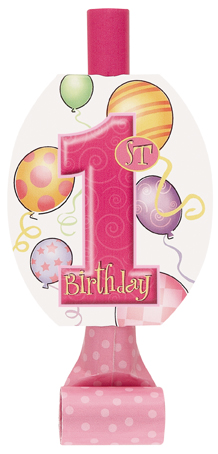
Hanging balloons and streamers around the party room and high-chair decorations will excite even the smallest party-goers as they will love the bright colours. Party blowers might be fun to use to make them laugh. Tableware can be bright and simple, or feature their favourite character – Peppa Pig, for example. A mixture of the two works well and won’t be too overwhelming for little eyes to take in. Animal-themed parties are universally popular.

1st Birthday Party BagsParty Bag Ideas
It may be fun to send the smallest guests away with their very own helium balloon that they can gaze at when they get home. Otherwise, filling a 1st birthday party bag with a wooden toy, a board book that you can read at bedtime or some bath toys will ensure that the fun doesn’t stop when it’s time to leave.

Fun Dinner Idea’s for your Toddler!

Italian cookery writer Valentina Harris has created these delicious recipes for toddlers featuring the new range of Garofalo pasta shapes, which include stars and moons, cars, trucks and flying saucers! All guaranteed to have your little one tucking in with gusto!

Moonbeam Pasta

Stars and crescent moons make up the shapes of this gorgeously pretty variety of pasta for children. So I am inspired to create something that reminds me of shooting stars and happy dreams. Dress the pasta with as much of the sauce as you like, as some children like lots of sauce and others only want it barely coated, and refrigerate or freeze the rest for later use. To turn it into something slightly more sophisticated, substitute the ham for chopped chorizo or salami, and add some finely snipped fresh chives.

Serves 2

To dress up to: 120 g/4 1/2 oz Garofalo Anistelle pasta for children

1 spring onion, very finely chopped
1 tablespoon olive oil
2 tablespoons organic tomato passata
2 tablespoons mascarpone or single cream
1 slice cooked ham, cut into strips
3 baby sweet corn cobs cut into thin comet tail strips
A pinch of salt
Long shavings of fresh Parmesan, to garnish

Method

Bring a pot of lightly salted water to a rolling boil for the pasta. Meanwhile, fry the spring onion very gently in the olive oil until soft but not coloured. Add the passata and stir together. Allow to simmer for about 10 minutes, and then stir in the mascarpone or cream, the ham and the sweet corn cobs. You should end up with a sauce that is swirly and dreamily pink, with the long comet tails of the sweet corn through it. Cook the pasta until tender in the boiling water, drain and toss with the sauce. Pile the pasta into bowls or on to plates, garnish with the Parmesan shavings and serve at once.
PS For special occasions, finish off the dish with a tiny dusting of edible gold glitter, a little stardust sometimes works wonders on even the fussiest of diners!

Traffic Light Pasta

Cars and little trucks feature amongst the shapes in Pazzielle, so I thought a traffic light theme might be quite fun. Involving children in the cooking process not only teaches the a valuable life skill, but it also encourages them to want to eat the food they have helped to make, so for this recipe you can all get cracking on the job of de-seeding and cubing the tomatoes. To make this more ‘grown up’ add some chopped sun blush tomatoes and a tablespoon or two of pesto.

Serves 2

To dress up to: 120 g/4 1/2 oz Garofalo Pazzielle pasta for children

2 to 3 tablespoons unsalted butter, melted
2 to 3 tablespoons freshly grated Parmesan
3 tablespoons sweet corn, canned or frozen (defrosted)
3 tablespoons peas, canned or frozen (defrosted)
4 ripe, firm tomatoes, de-seeded and cut into cubes about the same size as the peas and sweet corn
A pinch of salt

Method

Bring a large pot of lightly salted water to a rolling boil. Cook pasta shapes as directed on pack. Drain and toss with the butter and the Parmesan, then stir through the sweet corn, peas and tomatoes and serve.

Creamy Tomato Pasta

This flying saucer shape calls for something creamy and delicious like this very simple creamy tomato sauce, where you can hide plenty of vegetables too! To the basic, fat free sauce you can add crisp cubes of pancetta, sautéed mushrooms or even a few thin slivers of Parma ham. Or try it without the ricotta, just as a really deliciously simple tomato sauce.

Serves 2

To generously dress up to 120 g/4 ½ oz Garofalo Dischi Volanti pasta for children

1 can plum tomatoes
1 stick celery, quartered
1 carrot, quartered
1 onion, peeled and quartered
sprig each parsley and basil
2 tablespoons ricotta cheese
A pinch of salt
Freshly grated Parmesan to serve

Method

Put the tomatoes, celery, carrot, onion and herbs into a saucepan and cover with a lid. Bring to the boil and simmer until all the carrot is tender. Blitz in the food processor and push through a sieve to remove any tomato seeds. Alternatively, go old fashioned and use a mouli! Return the sauce to the stove and boil it to reduce to a thick consistency, then stir in the ricotta and remove from the heat. Bring a large pot of lightly salted water to a rolling boil. Cook the pasta until tender, drain and toss with the sauce to cover. Serve sprinkled with a little freshly grated Parmesan.

Mini Meatball and Tomato Sauce Pasta

Meatballs are a great way to feed kids as you can hide all kinds of goodies inside them that they’ll never even know about! Making them really small makes them easy to eat and to mix with Motori pasta. You can make a huge batch of these and freeze them for later use

2 to 3 tablespoons richly flavoured Extra Virgin olive oil
1 cloves garlic, unpeeled and lightly crushed
200g/7 oz fresh or canned tomatoes or passata
salt and pepper
1 teaspoon chopped parsley or other herb of your choice
200 g/7 oz minced veal or beef or turkey or chicken
50 g/2 oz fresh breadcrumbs
50 g/2 oz Parmesan cheese, grated
1 egg yolk
1 tablespoon chopped parsley
1/4 wine glass cold water
1 egg, beaten thoroughly
3 tablespoons dry breadcrumbs
sunflower seed oil for deep frying
freshly grated Parmesan, to serve

Method

Fry the garlic very gently with the olive oil in a heavy-bottomed saucepan or frying pan. You only just want to flavour the oil slightly, so use your nose to smell the oil as it heats, when the garlic is sizzling, but before it goes brown (otherwise it will make the sauce bitter) take the garlic out and throw it away. Pour in the tomatoes and stir carefully. Simmer over a lively heat for about 10 minutes or until the sauce is glossy and thick. Season to taste, add chopped parsley, basil or other herbs as you prefer, keep warm and cover until required. Mix the meat, fresh breadcrumbs, cheese, egg yolk, salt, pepper and parsley together very thoroughly, then blend in the water gradually. Mix with your hands for a few minutes, then shape the mixture into small balls about the size of a small cherry. Roll in the beaten egg and fine dry breadcrumbs and then fry in hot sunflower seed oil for a few minutes, or until crisp and browned, turning frequently. Drain thoroughly on kitchen paper and transfer into the tomato sauce. Stir gently and heat through for about 5 minutes. Bring a pot of lightly salted water to the boil, add the pasta and cook until tender. Drain and mix with the meatballs and tomato sauce and serve with just a sprinkling of freshly grated Parmesan.

BAKED MOTORI WITH HAM AND CHEESE

This is a very simple and easy dish that I remember very fondly from my childhoood in Tuscany. I really prefer to use Penne when I make this as it fits the memory much better, but I’ve tried it out with the Motori shape from the Garofalo range and it really works too. You can of course add other things to the dish such as grilled bacon, cooked peas, mushrooms or cauliflower florets, or blue cheese for a much stronger flavour. You can easily make this ahead and freeze it for later.

Serves 2

140 g Motori pasta
salt and pepper
200 ml/7 fl oz ready made béchamel or cheese sauce
2 tablespoons freshly grated Parmesan
2 slices best baked ham, chopped
1 tablespoon unsalted butter

Method

Cook the pasta in plenty of boiling salted water until al dente. Meanwhile, heat through the sauce and melt three quarters of the cheese into it. Drain the pasta and pour it back into the pot. Add three quarters of the sauce and the ham. Mix together. Grease a large ovenproof dish with half the butter. Pour in the dressed pasta and arrange it carefully. Pour over the remaining sauce and dot with the remaining butter. Sprinkle with the remaining cheese. Bake in a preheated oven at Gas mark 6/400 F/200 for about 15 minutes or until golden and bubbling. Remove from the oven, rest for 5 minutes, then serve.